
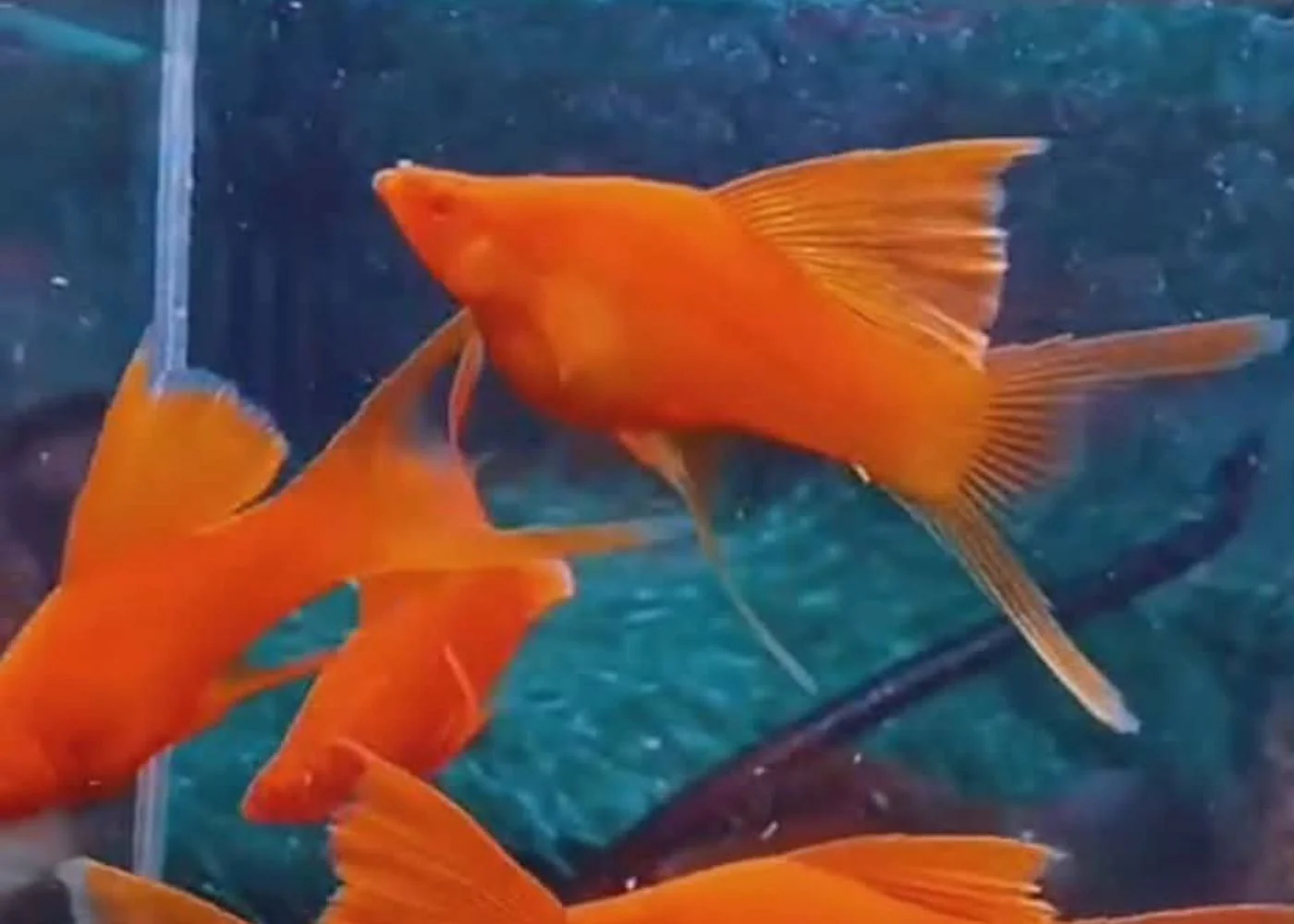
Swordtail - Bloodred Sabretail
Swordtail Bloodred Sabretail is a bold and eye-catching freshwater livebearer, valued for its intense red colouration and distinctive elongated tail fin. This variety showcases a deep, uniform blood-red body paired with an extended sabre-like lower caudal filament in males, creating a sleek and flowing appearance. Hardy, active, and adaptable, it is an excellent choice for aquarists seeking a vibrant, low-maintenance addition to a peaceful community aquarium.
Features of Swordtail Bloodred Sabretail
• Rich, solid blood-red colouration
• Males exhibit an extended sabretail fin
• Reaches approximately 10–12 cm in length
• Peaceful and suitable for community setups
• Lifespan of 3–5 years with proper care
The best aquarium size for Swordtail Bloodred Sabretail
A minimum aquarium size of 80 litres is recommended for a small group. For improved stability and swimming space, a 100 litre or larger aquarium is ideal. These fish are active swimmers and benefit from a layout that balances open water with planted areas. Maintaining a ratio of one male to multiple females helps minimise stress and competition.
Tank Mate Compatibility for Swordtail Bloodred Sabretail
• Guppy
• Platy
• Molly
• Harlequin Rasbora
• Corydoras Catfish
Diet for Swordtail Bloodred Sabretail
Swordtail Bloodred Sabretail is an omnivore that thrives on a varied diet. A high-quality flake or micro pellet should be used as the staple, supplemented with frozen or live foods such as brine shrimp, daphnia, and bloodworms. Plant-based additions like spirulina flakes or finely blanched vegetables support digestion and enhance colour intensity. Feed 1–2 times daily in moderate portions.
Aquarium Setup Swordtail Bloodred Sabretail
Aquarium Filtration
Moderate filtration is sufficient. A reliable internal or hang-on-back filter will maintain clean, well-oxygenated water and stable conditions.
Aquarium Plants
Live plants are recommended to replicate a natural environment. Hardy species such as Java fern, Anubias, and Vallisneria provide shelter and reduce stress.
Aquarium Lighting
Moderate LED lighting enhances the vivid red colouration while supporting plant growth.
Aquarium Heating
Maintain water temperature between 22–26°C using a dependable aquarium heater to ensure consistency.
Aquarium Substrate
Fine gravel or sand substrate is suitable, offering a natural aesthetic and supporting plant life.
Aquarium Decorations
Incorporate driftwood, rocks, and planted sections to create hiding spaces while preserving open swimming areas.
Water Parameters
Maintain pH between 7.0–8.0 and water hardness between 8–20 dGH. Regular weekly water changes of 20–25% are essential to maintain optimal water quality and overall fish health.
Swordtail Bloodred Sabretail is a bold and eye-catching freshwater livebearer, valued for its intense red colouration and distinctive elongated tail fin. This variety showcases a deep, uniform blood-red body paired with an extended sabre-like lower caudal filament in males, creating a sleek and flowing appearance. Hardy, active, and adaptable, it is an excellent choice for aquarists seeking a vibrant, low-maintenance addition to a peaceful community aquarium.
Features of Swordtail Bloodred Sabretail
• Rich, solid blood-red colouration
• Males exhibit an extended sabretail fin
• Reaches approximately 10–12 cm in length
• Peaceful and suitable for community setups
• Lifespan of 3–5 years with proper care
The best aquarium size for Swordtail Bloodred Sabretail
A minimum aquarium size of 80 litres is recommended for a small group. For improved stability and swimming space, a 100 litre or larger aquarium is ideal. These fish are active swimmers and benefit from a layout that balances open water with planted areas. Maintaining a ratio of one male to multiple females helps minimise stress and competition.
Tank Mate Compatibility for Swordtail Bloodred Sabretail
• Guppy
• Platy
• Molly
• Harlequin Rasbora
• Corydoras Catfish
Diet for Swordtail Bloodred Sabretail
Swordtail Bloodred Sabretail is an omnivore that thrives on a varied diet. A high-quality flake or micro pellet should be used as the staple, supplemented with frozen or live foods such as brine shrimp, daphnia, and bloodworms. Plant-based additions like spirulina flakes or finely blanched vegetables support digestion and enhance colour intensity. Feed 1–2 times daily in moderate portions.
Aquarium Setup Swordtail Bloodred Sabretail
Aquarium Filtration
Moderate filtration is sufficient. A reliable internal or hang-on-back filter will maintain clean, well-oxygenated water and stable conditions.
Aquarium Plants
Live plants are recommended to replicate a natural environment. Hardy species such as Java fern, Anubias, and Vallisneria provide shelter and reduce stress.
Aquarium Lighting
Moderate LED lighting enhances the vivid red colouration while supporting plant growth.
Aquarium Heating
Maintain water temperature between 22–26°C using a dependable aquarium heater to ensure consistency.
Aquarium Substrate
Fine gravel or sand substrate is suitable, offering a natural aesthetic and supporting plant life.
Aquarium Decorations
Incorporate driftwood, rocks, and planted sections to create hiding spaces while preserving open swimming areas.
Water Parameters
Maintain pH between 7.0–8.0 and water hardness between 8–20 dGH. Regular weekly water changes of 20–25% are essential to maintain optimal water quality and overall fish health.
Original: $27.89
-65%$27.89
$9.76Description
Swordtail Bloodred Sabretail is a bold and eye-catching freshwater livebearer, valued for its intense red colouration and distinctive elongated tail fin. This variety showcases a deep, uniform blood-red body paired with an extended sabre-like lower caudal filament in males, creating a sleek and flowing appearance. Hardy, active, and adaptable, it is an excellent choice for aquarists seeking a vibrant, low-maintenance addition to a peaceful community aquarium.
Features of Swordtail Bloodred Sabretail
• Rich, solid blood-red colouration
• Males exhibit an extended sabretail fin
• Reaches approximately 10–12 cm in length
• Peaceful and suitable for community setups
• Lifespan of 3–5 years with proper care
The best aquarium size for Swordtail Bloodred Sabretail
A minimum aquarium size of 80 litres is recommended for a small group. For improved stability and swimming space, a 100 litre or larger aquarium is ideal. These fish are active swimmers and benefit from a layout that balances open water with planted areas. Maintaining a ratio of one male to multiple females helps minimise stress and competition.
Tank Mate Compatibility for Swordtail Bloodred Sabretail
• Guppy
• Platy
• Molly
• Harlequin Rasbora
• Corydoras Catfish
Diet for Swordtail Bloodred Sabretail
Swordtail Bloodred Sabretail is an omnivore that thrives on a varied diet. A high-quality flake or micro pellet should be used as the staple, supplemented with frozen or live foods such as brine shrimp, daphnia, and bloodworms. Plant-based additions like spirulina flakes or finely blanched vegetables support digestion and enhance colour intensity. Feed 1–2 times daily in moderate portions.
Aquarium Setup Swordtail Bloodred Sabretail
Aquarium Filtration
Moderate filtration is sufficient. A reliable internal or hang-on-back filter will maintain clean, well-oxygenated water and stable conditions.
Aquarium Plants
Live plants are recommended to replicate a natural environment. Hardy species such as Java fern, Anubias, and Vallisneria provide shelter and reduce stress.
Aquarium Lighting
Moderate LED lighting enhances the vivid red colouration while supporting plant growth.
Aquarium Heating
Maintain water temperature between 22–26°C using a dependable aquarium heater to ensure consistency.
Aquarium Substrate
Fine gravel or sand substrate is suitable, offering a natural aesthetic and supporting plant life.
Aquarium Decorations
Incorporate driftwood, rocks, and planted sections to create hiding spaces while preserving open swimming areas.
Water Parameters
Maintain pH between 7.0–8.0 and water hardness between 8–20 dGH. Regular weekly water changes of 20–25% are essential to maintain optimal water quality and overall fish health.


